.png)

.png)
UrbanLeap is an e-procurement desktop application for the public sector. I created the MVP in 2020 and am the only designer on the team.
As part of our goal to get funding, we needed more customers. The issue we identified with Sales was that users saw value in the platform, but the decision-makers were not yet on board. This company-wide challenge became fodder for a generative sprint dedicated to uncovering and delivering value to the decision-makers.
TDLR; we need to get decision-makers to care about the product.
Only product designer.
Responsible for end to end design.
1 Product Manager (PM)
2 Engineers (Eng)
4 weeks
from initiation to implementation
Our business goal was to increase our close rate for decision-makers by 2x. The metrics we evaluated were:
- Close Rate
- Qualitative interviews with Sales
Two prospects came on board as customers based on this feature. It was a big deal because the company is seed-stage, and it only had ten customers at this point. Ultimately, we didn't get the traction we were hoping for based on various factors (including the timing of the release).
The theme we were dealing with was creating value for the decision-maker (aka the buyer), so they want to purchase UrbanLeap. We needed first to understand what those decision-makers cared about.
The product's primary user is rarely the buyer. The buyer persona changes between cities and agencies, making it challenging to target a particular role. Decision-makers are Department Heads, City Managers, and Procurement Officers. The PM and I created personas to understand the primary pain points and motivations to understand how we could deliver value. The Procurement Officers had different pain points (discussed in a case study yet to come).
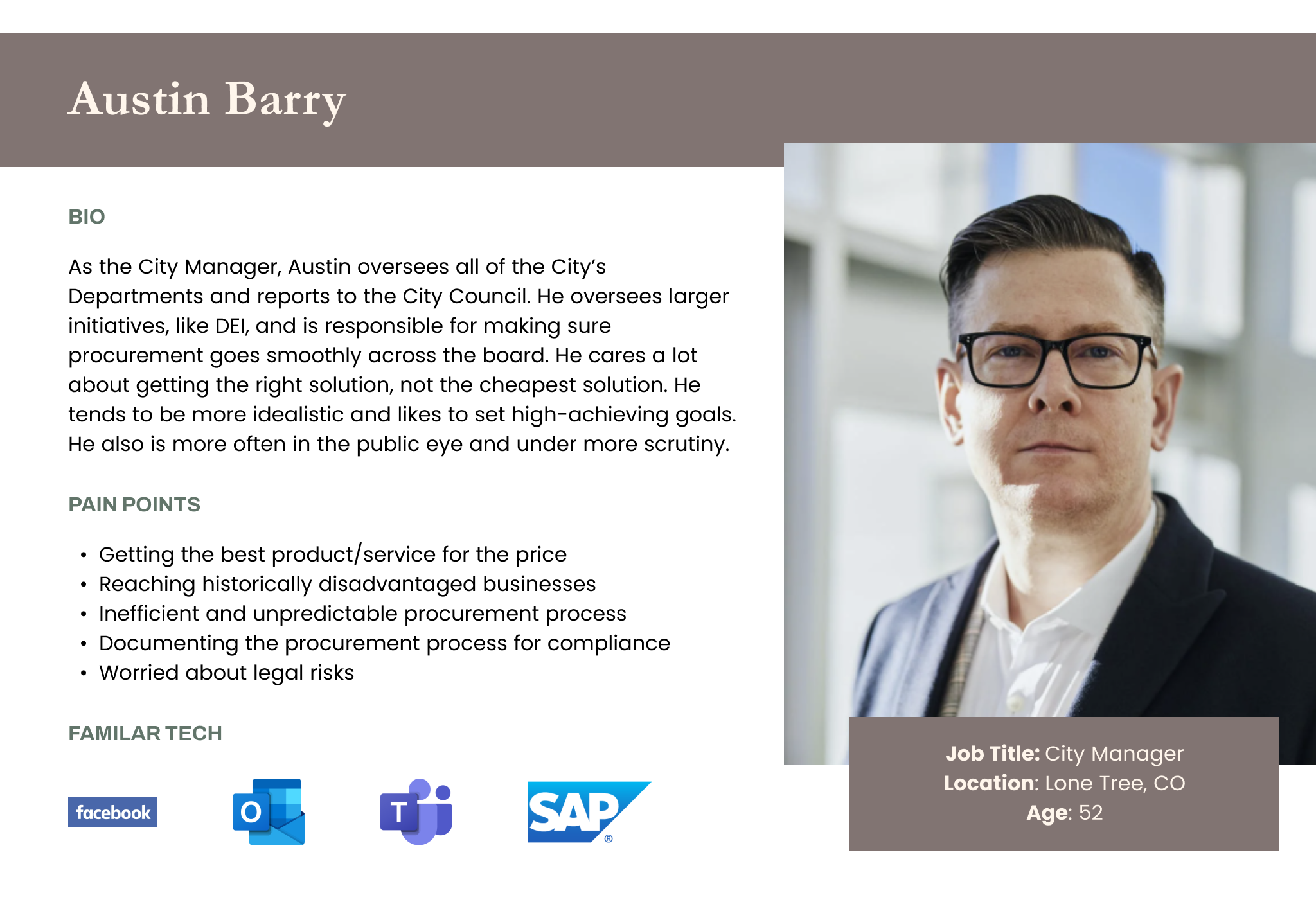
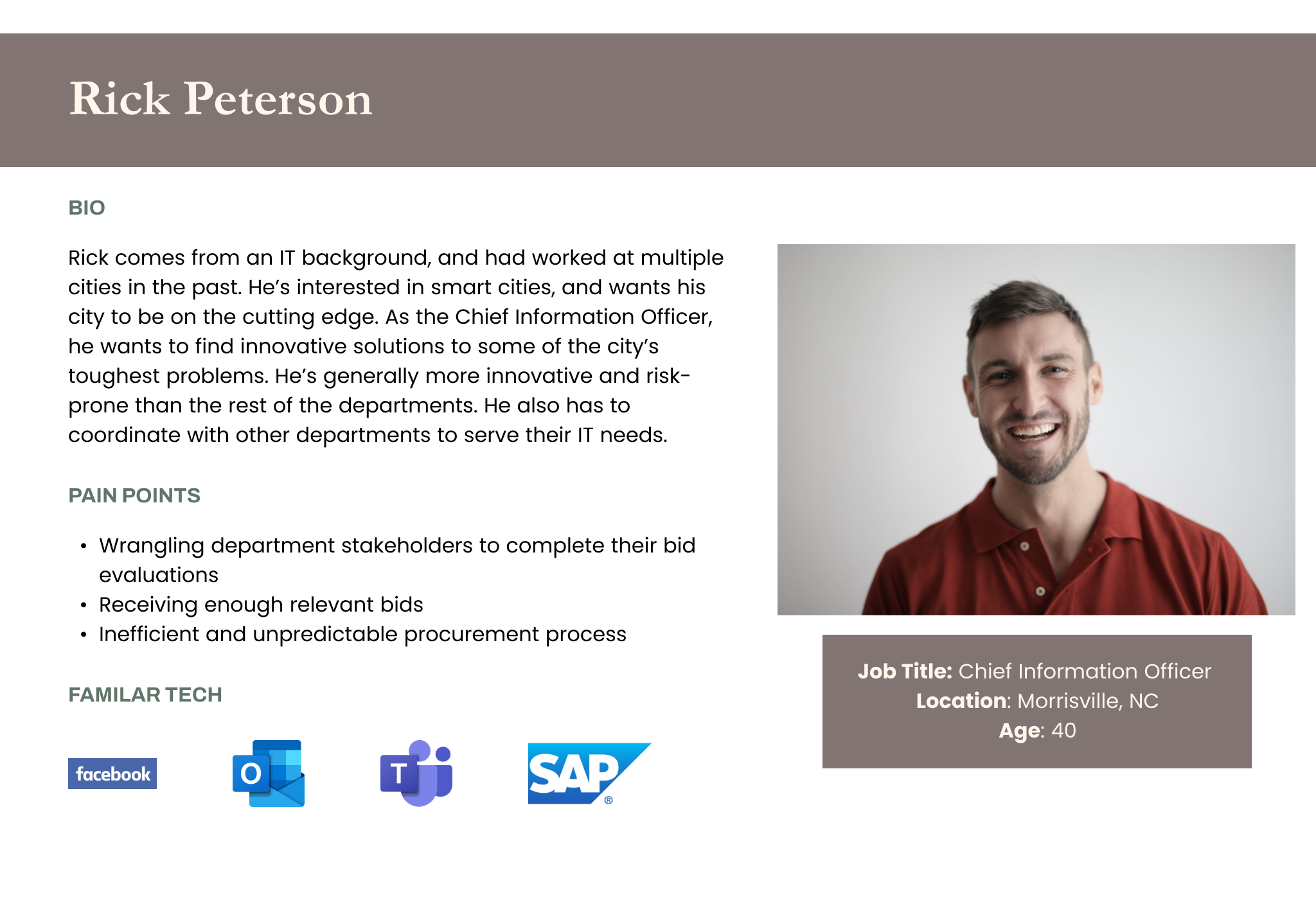
It was challenging to identify one solution to these different pain points. Taking a step back, the PM and I looked at each persona’s overall involvement in the procurement process and found more commonalities.They were primarily concerned about managing workflows and getting visibility at a high level.
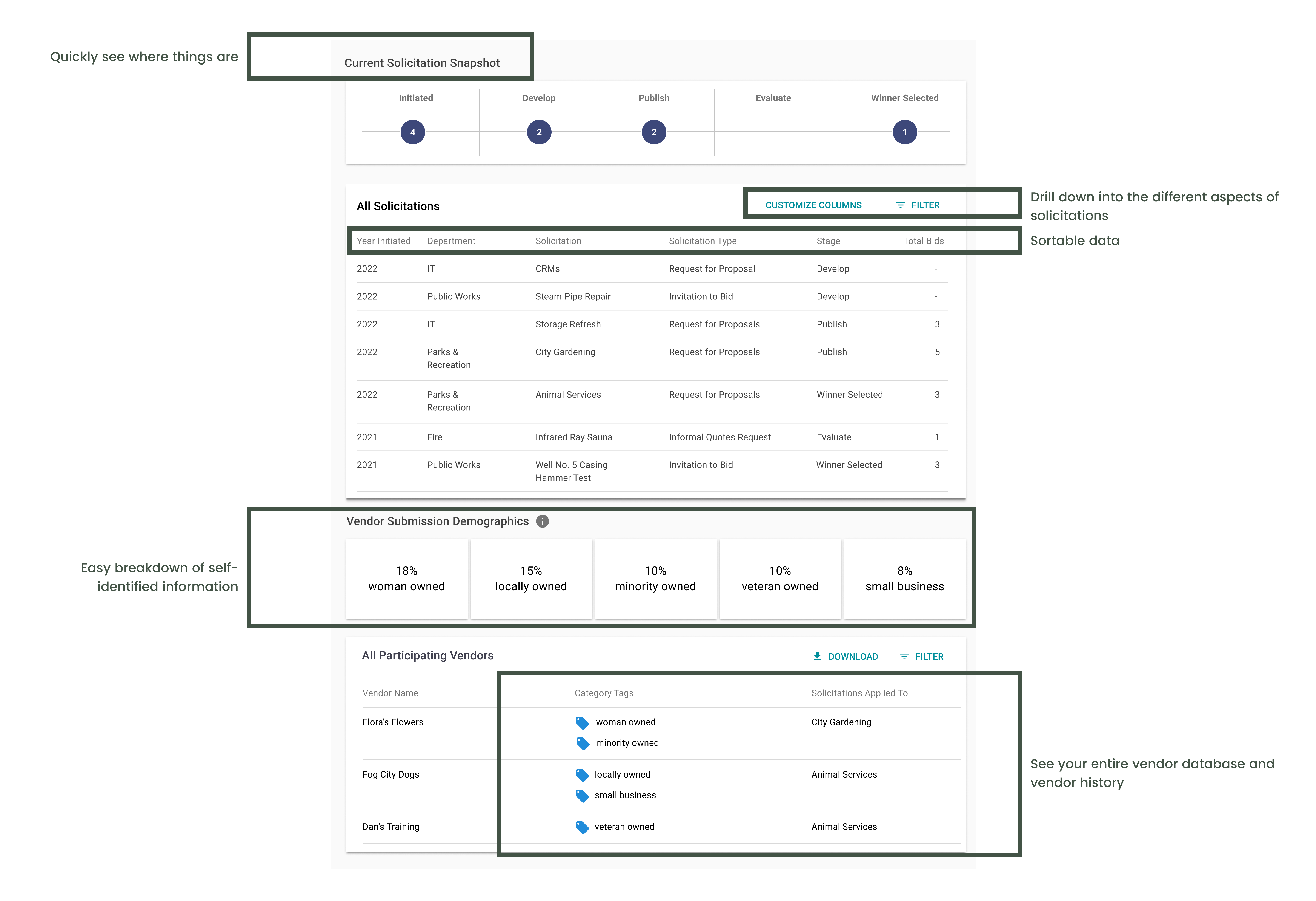
After a team brainstorm, the PM and I chose to move forward with the idea of sharing data to help shed light on what’s happening in the city. We thought it would have the most impact with the least effort since we were leveraging information we already had.
Creating a task flow for this sprint wasn’t helpful. The user would sort or filter the data or see it presented in a way that would help them gain insight to take their next action. I needed to understand what questions we could answer with the collected data.
This page should help answer:
It was easy to get carried away looking at graphs and thinking of all the possible ways to visualize data. We were limited to simple visualizations, and if we could leverage existing design components, that would be even better. I reviewed Material Design guidelines and Nielsen Norman Group best practices.
With this in mind, I made some adjustments based on five usability tests (customers & internal team).
.png)
.png)
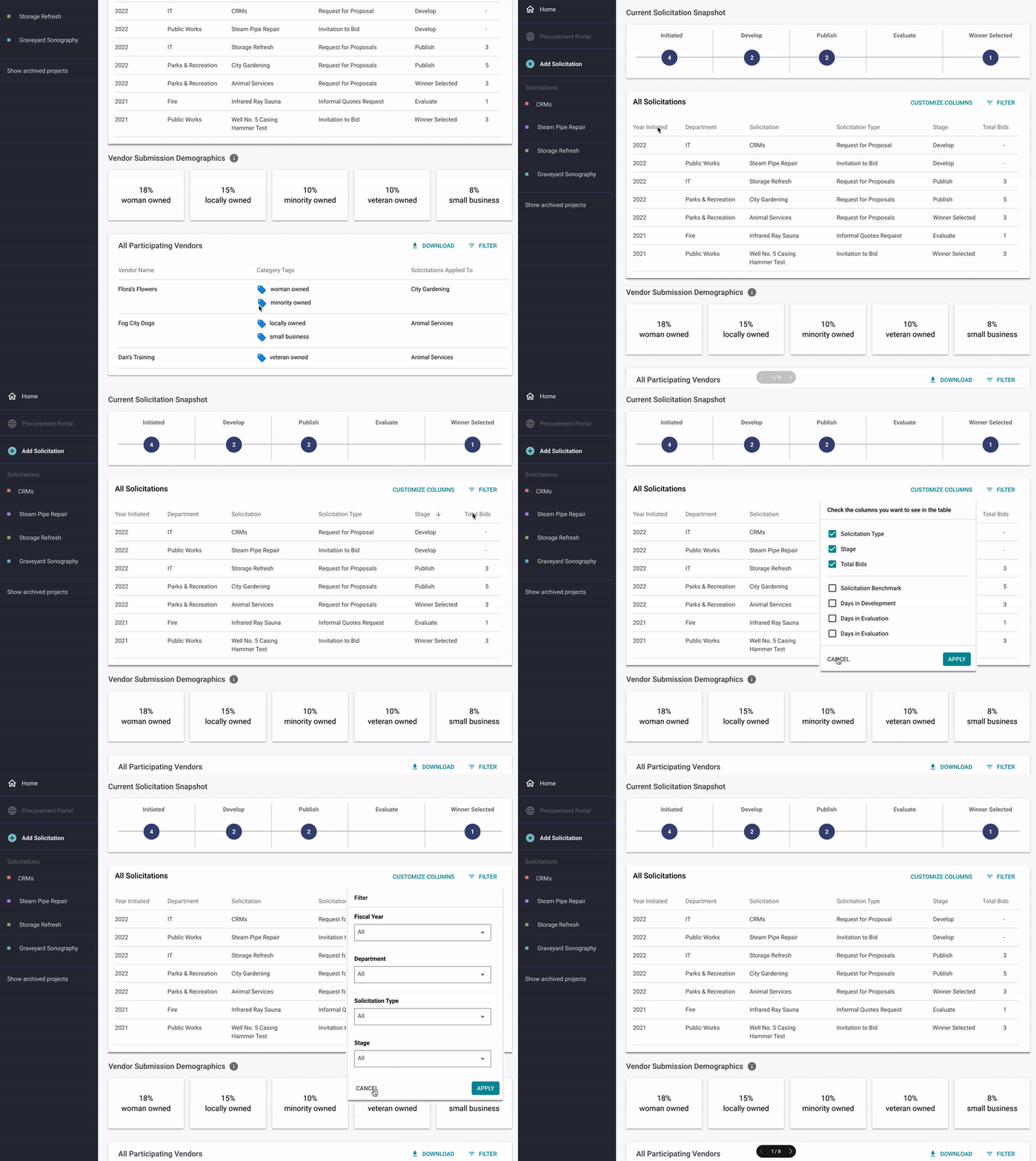
Two new customers came on board because of this sprint, which was a big deal since we only had a handful of customers. However, Sales told us that many potential customers said they couldn’t use this feature immediately. For a new customer, there would be nothing. We failed to acknowledge that data needs to exist in the first instance to start delivering value.
If given a chance to do it again, I would do a couple of things differently:
- Time the product release better
- Focus more on empty states for new customers
- Add information regarding budgets; cities care about this, but we don’t capture the information